
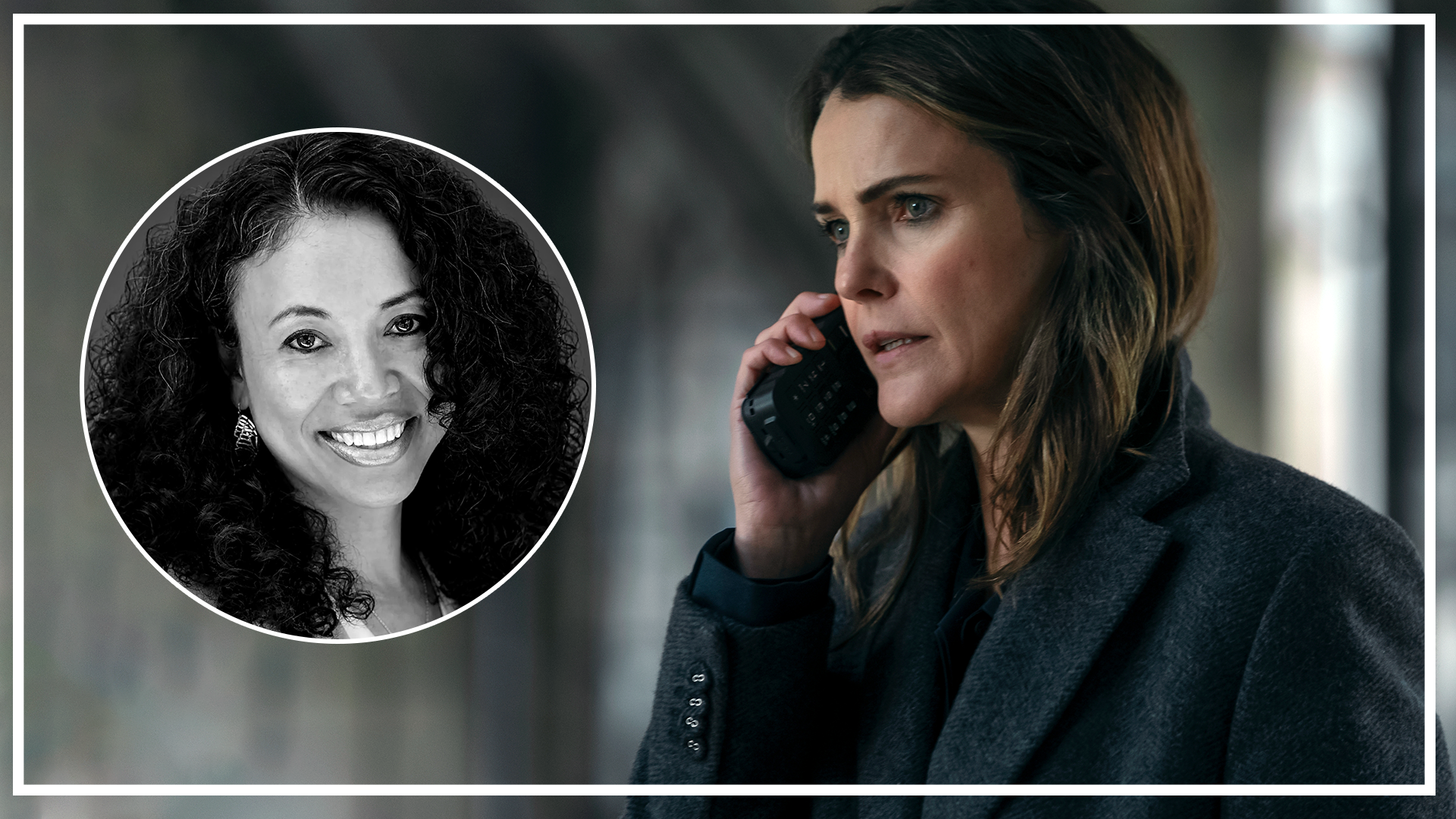
Picture Credit: Tiffany Smith Llorens / Netflix
Anyone who watches movies and shows knows the work of VFX wizard Tiffany Smith Llorens. Prior to becoming the Senior Executive Producer at Framestore, she was the VFX director at Netflix for several years. She oversaw The Boroughs, Wednesday, Ripley, and Vikings: Valhalla, to name a few.
Before her days at Netflix, she worked on films such as Mr. & Mrs. Smith, Titanic, Mission: Impossible II, Deep Blue Sea, Midnight Meat Train, Reign of Fire, and Road to Perdition. Before crafting spectacle and drama behind-the scenes, Llorens grew up as a kid obsessing over The Goonies, The NeverEnding Story, E.T. the Extra-Terrestrial, and Gremlins. Given her career, her getaway movies track.
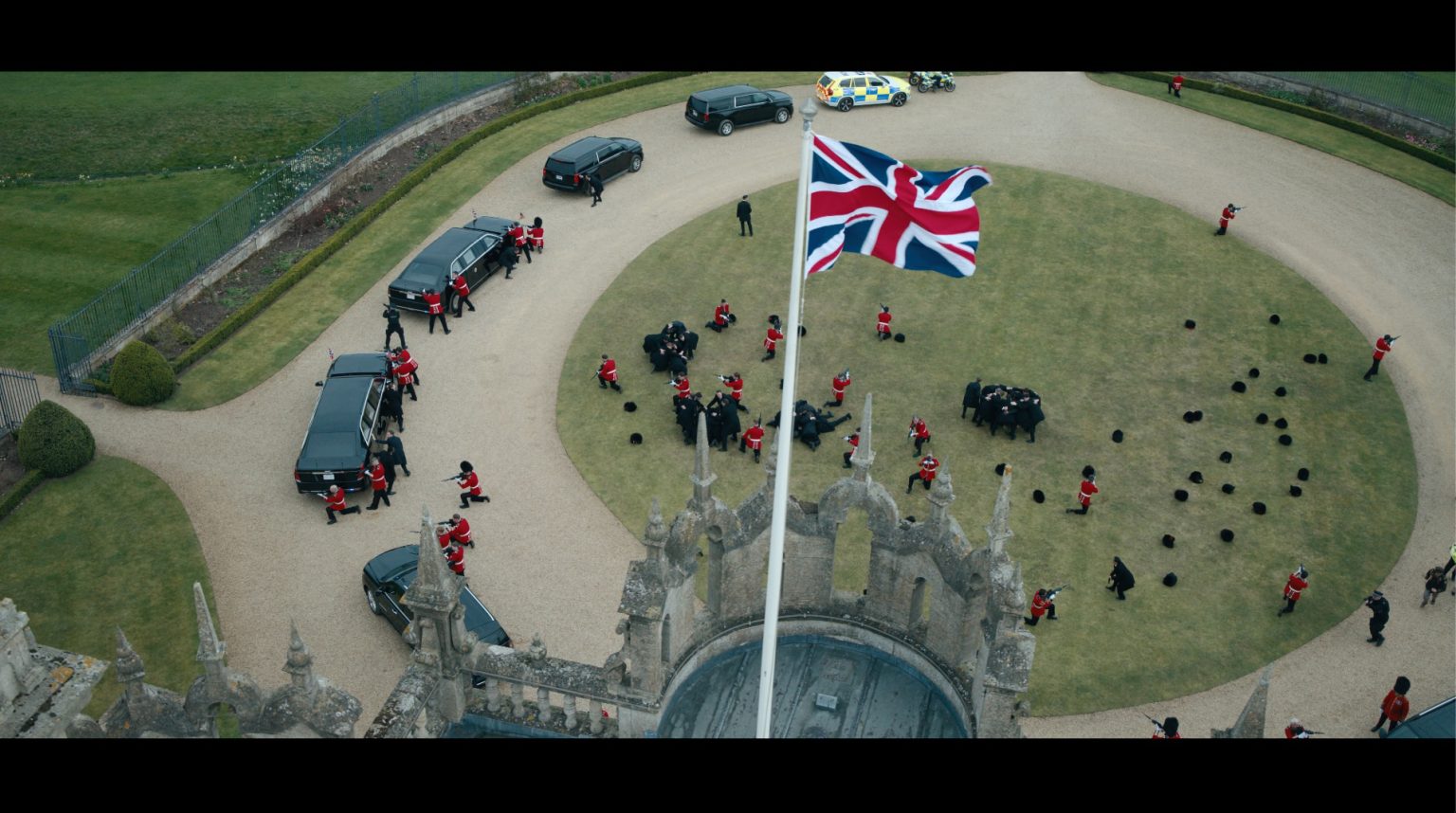
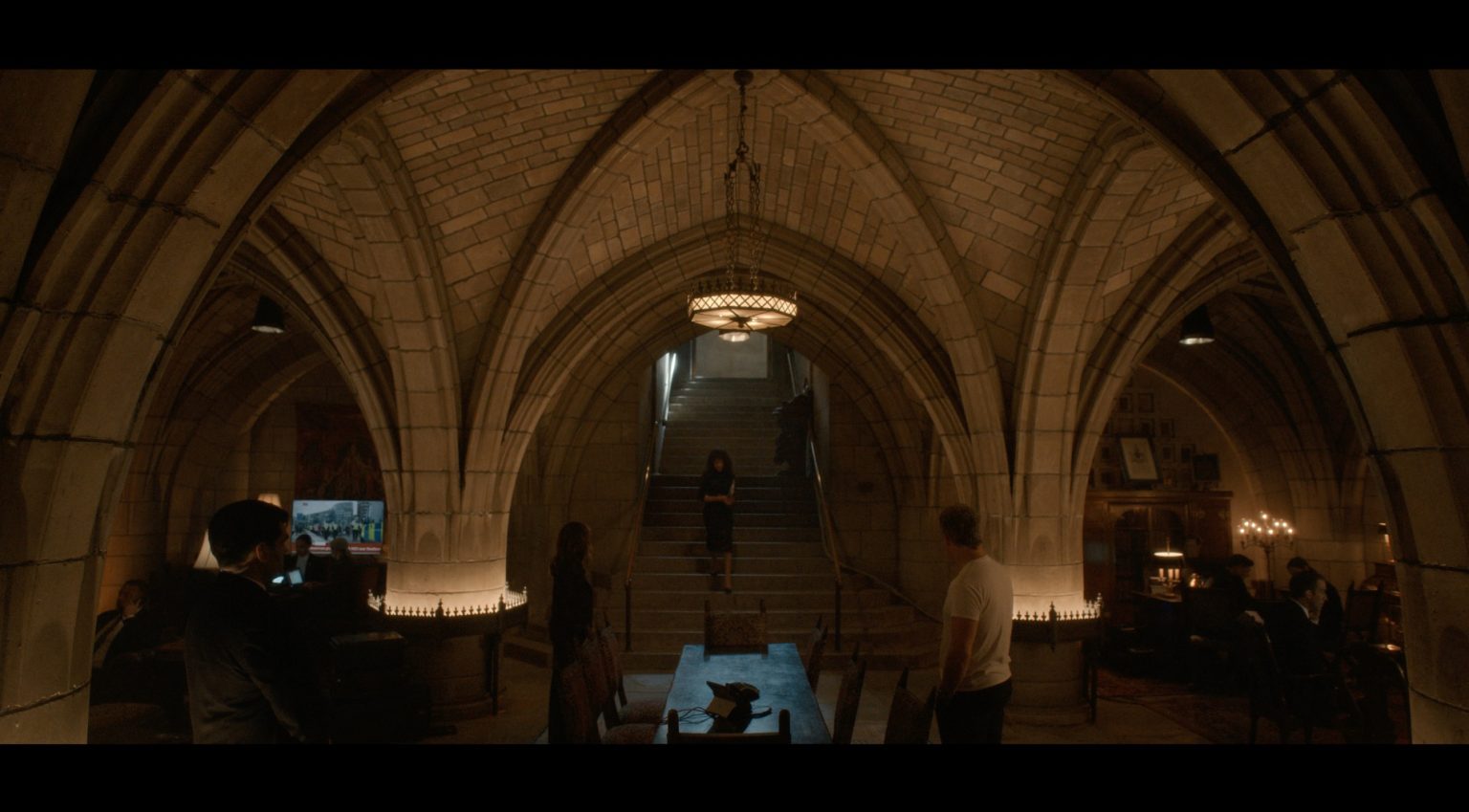
For The Diplomat, which she worked on as a vendor for Framestore, the visual effects call for a delicate eye. The VFX needs to remain entirely invisible. Recently, the VFX guru spoke with What’s on Netflix about the art of visual effects.
You started in ’96. What were those early gigs like?
Before that, I needed a job that paid for anything that I was doing because I moved out at 17 and I started going to Cal State Northridge. And then I started PAing on a ton of independent projects, a ton of music videos, a ton of crazy videos and different things as a PA.
Luckily, though, I met a few folks. In ’96, a friend said, “Hey, Cinesite Hollywood is hiring.” I walked in the door and got a job with my little orange bug delivering film from studio to studio. But my first jobs were Space Jam and Titanic, and Waterworld was finishing up. I’m thinking this is how Hollywood always is, not realizing I walked into an ultimate blessing. What’s funny is I started on April Fool’s Day in ’96, and then my last day at Cinesite Hollywood because they closed the Hollywood branch was Friday the 13th.
And I was working on Freddy vs. Jason at the time. It was actually really fun, because you remember that Freddy-pillar?
The bong hit then the Freddy-pillar shows up? Of course, fantastic cinema.
Everybody remembers that.
Great scene. What were the early gigs for VFX where you were just like, “Oh, I really like this particular part of moviemaking?”
I didn’t know that I loved it until I was in it. When I was going to Cal State Northridge at the time, I remember I had to do a speech for school. I was working on Air Force One with Harrison Ford, and I printed up some slides from the movies we were working on, when we used projectors back in the day. I printed up a blue screen of him about to jump out of an airplane and then clouds. I put it on the projector and then I put the clouds behind it and showed how it got comped together in one frame.
The whole class was amazed. I’m like, “Maybe there is something here…” I stuck with it. I was going to school to be an economics and Black history major. I was doing film on the side because I grew up in Hollywood.
Screenshot
That’s rare for someone in the film industry.
I’m L.A. born and raised, never left. I did it not thinking I would make a career out of it. When I did that speech, it’s funny, I was like, “This is pretty cool. What a freaking blessing and I’m doing these projects.” It was hard, but it was fun.
Those were the days where you had to come in and everybody locked arms and figured it out together. A lot of us that started as little baby VFXers, we all are still very good friends 30 years later and help each other and trust each other to work together, and it’s special.
For The Diplomat, what’s a day when you got to go deep diving with the Framestore team for a solution?
The Diplomat is a special kind of show because it’s an invisible visual effects show. It’s the story. It’s not starring visual effects; it’s supporting visual effects. When I was [working] at Netflix, that was a show that I took over on season two and partnered with Framestore on it. At the time I was on the spectacle team, like crazy spectacle. I had Wednesday, One Piece, and Avatar and all those crazy things with these giant budgets, starring visual effects.
On The Diplomat, the problem solving is the budget and how can we save your budget, but your story is still being executed in the best way possible, coming up with solutions. Sometimes the solution is to take the camera this way and you avoid some visual effects versus just adding visual effects.
For The Diplomat, you might be changing seasons of things. For season two at the time during the strikes, you couldn’t shoot during a certain time, and the trees look different during the time it was supposed to be. It’s a ton of work, but you don’t want that work to ever stand out. It always has to look very natural.
Whether you’re working on big spectacle or more subtle VFX in The Diplomat, is there still always a singular goal that you have for your job and the artists are working toward?
The goal is to always execute and execute well. At the end of the day, there’s major storytellers behind these things that have been trying to get their projects greenlit for years, and we should always steward over and take care of their baby and birth that baby in the best way possible. We should be taking care of it and making sure they feel like they don’t have to worry. We’ve got them.
You always run into stuff. Every show, every production, there’s always going to be something. Somebody burned through all the budget or you missed a day or the freaking wind kicked up. I’ve had these things happen where sand gets in all your cameras, nobody plans for that stuff. You just got to freaking figure it out.
As visual effects, it’s our job to come in as problem-solvers. You could do anything with time and money, but what else can we do if we don’t have time and money and we could avoid stuff or spend less, but try to get things looking as awesome as possible? Giving options and solutions, that’s a huge deal.
Screenshot
You can do anything with time and money, but should you? Should we have limitations?
Should you? Yes, because then it’ll go on forever and we’ll never deliver a show.
What about VFX in 2026 do you really appreciate? Are there certain advancements recently that have made the workflow smoother?
Oh my gosh, there’s so much I could say right now. Back in the day, I remember working on freaking trying to make water. Water was hard in the ’90s, making oceans. When they come over, there’s all these particles that spray up and the different white things you don’t think of because you just see it in nature. I can’t remember the show that we were testing on, but it was one with Marky Mark in the ocean [The Perfect Storm]. Now water has come so far where you could create it – and it’s freaking beautiful.
And hair, hair back in the day when people turned around, it looked like you were wearing a hair helmet. Now it’s just moving, beautiful, and you see Moana going around with these beautiful locks and clothes, all those things, they’ve moved along such a long way.
I’m a total nerd, so Roto a hundred years ago used to be people printing up film, projecting it on glass from a camera below it up on glass, and you put a piece of paper and you would roto each character, would draw each character, and now it’s advanced over time. Now you’re doing it on a box on a computer. Now you have other tools that are making things quicker with machine learning and things like that, make things quicker. As long as you keep going with the change.
When you started out, did you hope for these advancements?
When I was at Cinesite back then in the ’90s, we were always talking about eventually it’s going to be completely digital. There were a lot of folks that were immersed with film that refused to change and they said never would. I remember thinking once everyone moved with the change, these folks purposely left themselves behind, then it was hard for them to catch up.
There are always going to be changes in tech. It’s important for us to learn them and to figure out how we can embed them as new tools that our artists can learn from and make our stuff even cooler, quicker, better. Gosh, there’s so many things that you can do in visual effects.
Like I said earlier, you could do anything with time and money. You can make people freaking fly to the moon or Jupiter or whatever with time and money. It’s just making it look good. And how do you do it? Or what kind of film do you want? Does it need to be campy or whatever? You just figure it out. But it is important to learn the tech, and the tech does make stuff quicker and better if you allow it to.
Screenshot
One of your first gigs was on Titanic. James Cameron has said he’d have to wait for the perfect sunset sometimes, but now, he’d just do it digitally.
Yeah.
Which is maybe a shame, given the magic of being in the right time and place on a movie, especially the effect it had in that movie, but what’s your general philosophy these days for what should be practical versus digital?
Gosh, it depends on the show and the budget. What do they have? Is it going to cost more money to fully set up on location and shoot this thing for 200,000 a day, or is it one shot that’s maybe going to cost a fraction of that price?
In my mind, real life is always better.
If you’re able to capture something in camera and it’s totally real, there is something special behind it. It has a soul to it. I don’t know how to explain it other than that. But when you can’t get there, nowadays too, again, with all the changes happening with the studios and efficiencies and things like that, it’s super important to weigh it out.
If we’re only talking about a couple shots, how much is it to do it in visual effects on a stage? How much is it to go to a location with a full crew, rent a camera, rent the edge of your boat or whatever you’re going to do, do all the things and have a full setup? What is the budget difference, and is it going to further your story? Those are the things to keep in mind.
Again, this is my producer hat.
Is it more efficient to do it one way versus the other, and are you telling the same story? It’s about figuring that part out. If it’s a ton of shots, a full sequence and stuff, and you could get it in camera and it’s just freaking rad and beautiful, you should totally go for it because there is something about actors when they’re just in front of a green screen. There’s a different emotion there when they’re out in the elements and stuff. So, it’s weighing all those things out.
Then again, like you said with that Air Force One moment, there’s magic in digital artistry too.
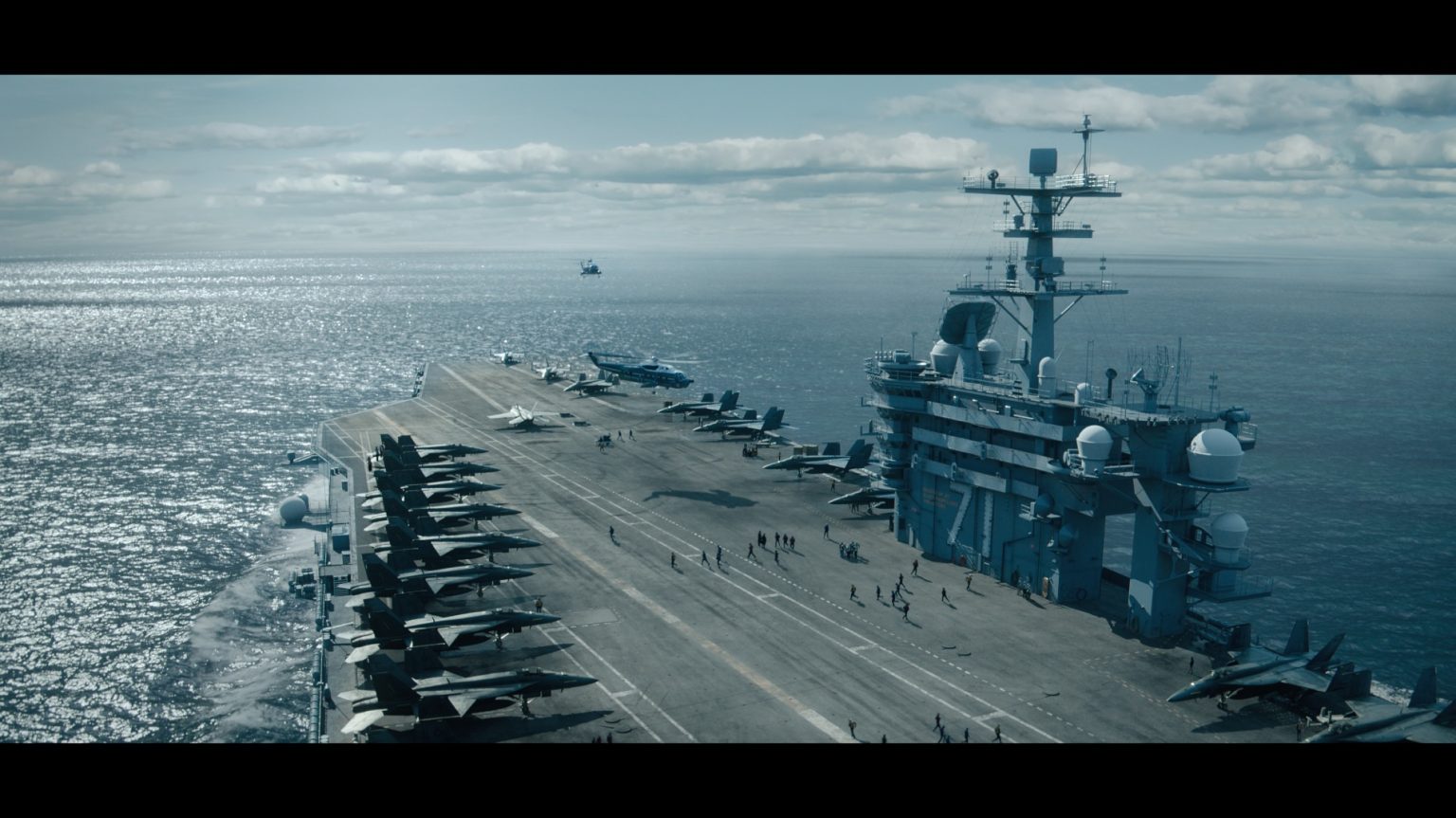
There is. It’s cool because you could change it. Even still when you shoot it live with The Diplomat, you might shoot it live and say, the sky’s not as beautiful as I want it to be, or I need to have the aircraft carrier out in the water that was shot in the street. With people riding around, then they did a full CG aircraft carrier that they put all the elements into, and it’s done so well that you don’t even think about it.
What’s a typical call you get about VFX when they’re shooting The Diplomat?
A lot of times, it could be anything if you’ve built that trust with them and they trust you enough to call and not think that you’re adding visual effects to the budget, but actually, coming up with solutions. They might call and ask if we shoot a certain way, how much are the set extensions to go down that way? If we’re shooting in New York and it’s supposed to be in London, then what can we do to avoid or save budget?
They’ll ask for suggestions on these different things. A lot of times you might just want a big hero establishing shot, and then the rest are things that are built on set that you could save and not have extensions for unless you really need it. It could be anything like that, but a lot of times they might, even down to something as simple as screens on set, should we have them on or off? Should we have playback back there and just film it and capture it in camera? And again, a lot of things, most of the time, anything that you could capture for real, it’s great if you can do it, even if it just becomes reference. Unless somebody could get hurt, then maybe don’t shoot it.
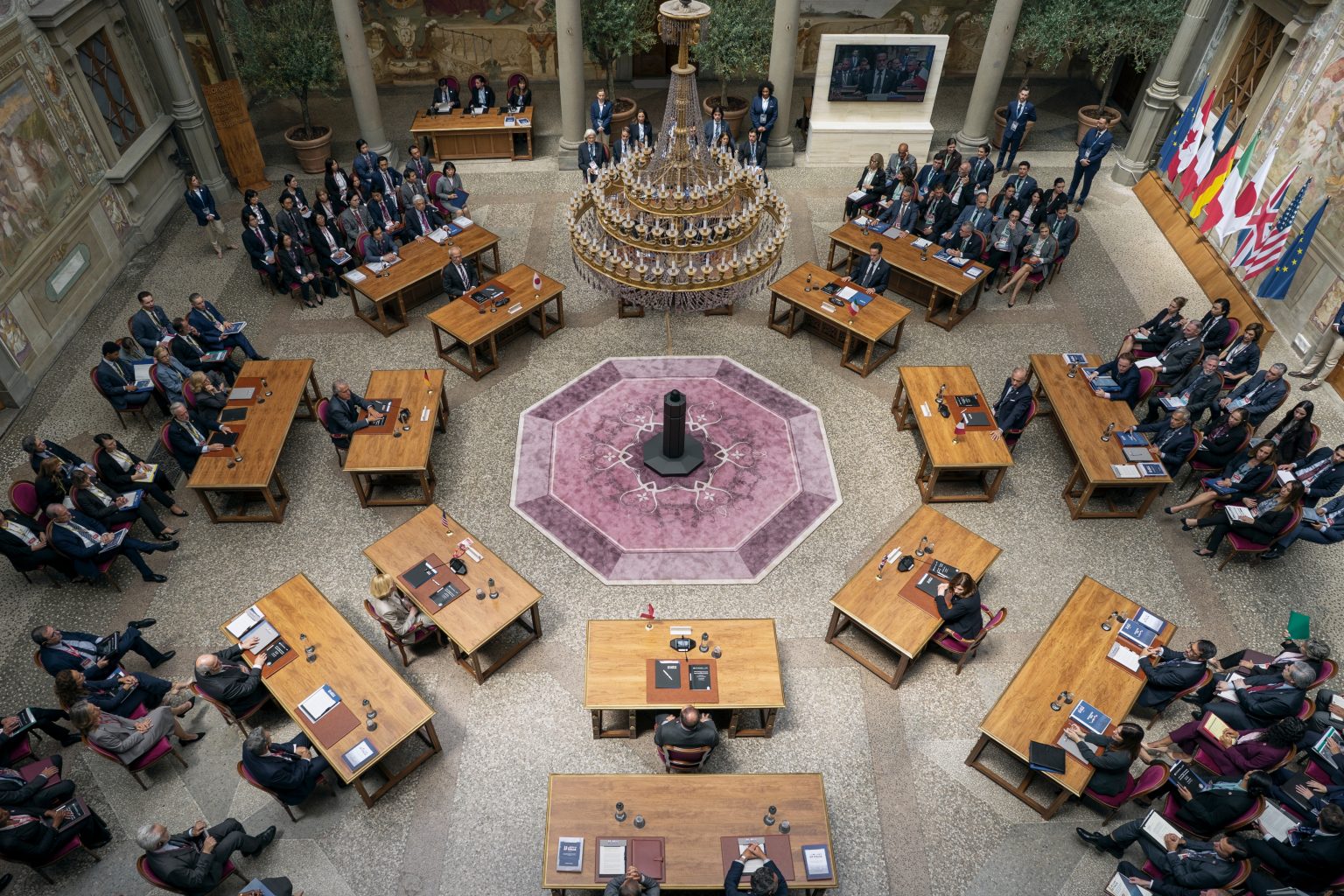
The Diplomat. Episode 408 of The Diplomat. Cr. Erika Kuenka/Netflix © 2026
When you are working on a show where the visual effects are clearly, to audiences, helping create a big fantastical world, what do you find most satisfying about world-building with visual effects?
Oh my gosh, you could just change everything, and it can be beautiful. The best is when you can go on a set for Wednesday, and you could feel the art melting off the walls that these people created. Each room, with the wallpaper and different things and the wardrobe, all those elements come together and visual effects support it still, just making the backgrounds or different things.
With those bigger spectacle things, it’s special to see artists living out their childhood dreams in One Piece or Avatar, where these things are coming alive for them. One Piece was another one where they built these ships, but they couldn’t build them super tall, then they built them for a certain amount and then the effects extended them, or there’s creatures in there that you’re riding in Avatar. Which makes me think of a NeverEnding Story [Laughs].
I spoke with Ross Wilkinson from Framestore about creating Appa, making him fly, and it was obvious how much visual effects artists love these creatures they make.
On the VFX side, those artists are diving deep into the skeleton of each creature, the muscles and how the muscles move. They literally will build out the skeleton. They’ll build out the muscles. They’ll really study these creatures or a similar creature to see how they move. Then even if they play them without fur you could see all that movement, and then when they put fur on it, it’ll have that more natural movement.
They’re almost like little mini scientists, now that I’m saying all that out loud, where they’re really figuring out all the biology behind them. Sometimes the biology doesn’t matter because a showrunner wants to see a creature fly, even though their wings might not be big enough for them to really fly in real life. You just got to ignore that [Laughs].
[Laughs] What have been some peak moments for you? Gigs you look back on incredibly fondly?
That’s a hard one. I have to say, I had fun on Freddy vs. Jason because we built so many bonds on that one where we were just freaking figuring out what to do. I remember being on a show called Tyrant with a couple folks and things were blowing up all the time. If you didn’t have an element, we would just run to the back and blow stuff up and throw up a green screen.
Or I’ve literally wrapped my son in a costume and had him run across a green screen so he could be a little person running in the background. Coming up with elements and problem-solving, if you allow yourself, you just have fun with it instead of thinking, “Oh my God, we don’t have this thing.” Well, how can we get it? Can we throw some paint on the wall and make it happen?
Those are the fun things where it’s the humans behind it where we just lock arms and figure out the problem-solving to it. Producers do so much to keep everybody constantly moving, but then, this sweet team develops this teamwork where when you finish it, it is a huge victory.
Dealing with major technical complications while keeping a sense of play with other artists, that’s pretty great.
When you can just build with the other humans on the team and figure out a solution together, when you get to the end of it, you’re celebrating. The relationships that you make in this industry are so important. People remember how you make them feel when we’re taking care of their baby. When it’s on screen for the first time, it’s such a special thing.
