
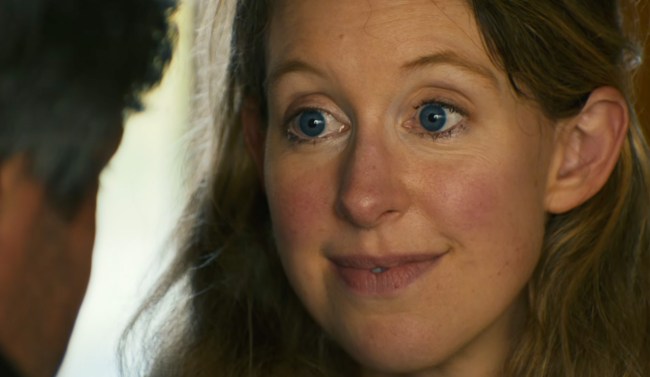
“I’m so excited to see this movie — it has one of the highest scores ever on Letterboxd.”
That’s the pitch Gold Derby overheard an eager young You Can See Everything ticket holder make to their older moviegoing companion ahead of a sold-out screening of the Nathan Fielder and Lance Oppenheim-directed phenomenon at an Upstate Films outpost in an outer county of New York on opening weekend. The other person’s response was noncommittal, either because they knew the film’s record-setting Letterboxd score already or had little to no interest in what folks were saying on the favored platform among Gen Z and younger millennial moviegoers.

We lost track of that duo as the audience filed out of the theater three hours later, so didn’t get to learn whether You Can See Everything played effectively for both demographics in that small sample size. But on Letterboxd, TikTok, and Instagram, anyway, Fielder and Oppenheim’s documentary-narrative hybrid has become the latest obsession among the young and very online crowd (70% of the opening weekend audience was under 35), and their enthusiasm has changed the state of the Oscar field as we know it — dispatching movies aimed at older viewers and voters like The Social Reckoning, Klara and the Sun, and Digger into early Oscar retirement.
Obsessed with Everything
Stop us if you’ve heard this one before: an inexpensive movie aimed at a select younger audience debuts to strong at the box office, and then explodes during its second weekend as wave after wave of curious onlookers flood theaters captivated by the extensive coverage on social media and in legacy media. Meanwhile, platforms like Letterboxd, Instagram, and X are awash in posts proclaiming said movie a major awards player and those fan-led campaigns are noticed and amplified by prognosticators.
That’s what’s happening with You Can See Everything right now, but we also saw this cycle play out with Curry Barker’s horror blockbuster, Obsession, back in May. When Focus Features dug their claws into the “Monkey’s Paw” variant at the 2025 Toronto International Film Festival, they almost certainly weren’t thinking of it as their big 2026 Oscar play. But the internet quickly told them otherwise, with posts calling the film’s breakout star, Inde Navarrette, a Best Actress contender swamping social media platforms mere days after Obsession‘s release.
Gold Derby was one of the first outlets to ask her about that fan campaign, and she described the online response as “extremely validating,” and said scoring a Best Actress nomination would be “a dream.” Barring a major campaign implosion that dream is almost certain to become reality; Navarrette has been a lock for a nomination since our Oscar predictions center went live over the summer, and she’s still firmly ensconced in the Top 5 contenders.
Best Actress
1.

2.

3.

Inde Navarrette
Obsession
4.

5.

6.

Ruth Madeley
Being Heumann
7.

Virginie Efira
All of a Sudden
8.
Sandra Hüller
Fatherland
9.

Rosalind Eleazar
Misty Green
10.

Marion Bailey
Tender Loving Care
Still, Focus isn’t taking the pedal off the metal of the Obsession campaign; the label has been hosting FYC events on both coasts throughout spooky season, including a gathering this week at L.A.’s Little Toni’s Restaurant — the site of the film’s much-loved “No, no, no,” scene — where Navarrette and Barker reunited with their collaborators, including co-stars Michael Johnston, Cooper Tomlinson, and Andy Richter, as well as the film’s department heads, before they were shuttled off to yet another industry screening and Q&A across town.
Attendees queued to snap pictures with Navarrette in Nikki’s booth while dining on the restaurant’s signature pizza, meatballs, and cannoli (fortunately no cat sandwiches). Gold Derby chatted up cinematographer Taylor Clemons, who was floored when told that Obsession and Navarrette were both in Oscar contention, and that he might need to pick up a tuxedo in the coming months. “We had no idea it would turn into this,” he told us.

But don’t just take our word about the clear link between You Can See Everything and Obsession; the latter’s leading man can see it as well. “I’m also seeing things about that movie being the highest-rated film on Letterboxd,” Johnston told us in a recent chat, adding that he hasn’t seen the film yet, but did recently meet Fielder in person, which delighted his Nathan for You-loving heart. “I’m not at all surprised about that, because he’s brilliant. I’ve seen every episode of Nathan for You multiple times.”
For an industry perspective on this apparent youth quake in theaters and the Oscar race, we sought out analyst and test-screening maestro Kevin Goetz, who grokked where we were coming from. “Younger audiences don’t want to just see a movie — they want to be a part of what everyone is talking and posting about,” he observes. “Our idea of a great movie hasn’t changed, but who starts the conversation has. Audiences have always been the final judge of whether a film connects. Now they’re also helping decide how much it matters culturally, in real time, sometimes before the awards conversation catches up.”
Right now, the awards conversation has Obsession and You Can See Everything positioned as Best Picture contenders, with Fielder and Oppenheim’s film catapulting to the No. 8 spot. Even though Barker’s picture recently dipped to on-the-bubble No. 11, it has a clear shot at returning to the Top 10 should wavering contenders like I Play Rocky and Artificial hit the mat.
Best Picture
1.

2.

3.

4.

5.

6.

7.

8.

9.

10.

With the enthusiasm for You Can See Everything still at a fever pitch, some of the film’s more avid fans aren’t just seeing it as a contender for a Best Picture nomination — they think it could deliver the knockout blow to Matt Damon’s already-battered Odysseus in Christopher Nolan’s front-runner, The Odyssey. As expressed by Variety‘s Owen Gleiberman, their reasoning is that Oscar voters will cast their ballots for the Fielder joint so they don’t seem so… well, old.
For his part, Goetz hears that argument, but offers a few words of caution. “I think it’s too simple to say older Academy members vote for films because they’re afraid of seeming irrelevant,” he notes. “These are accomplished artists and filmmakers with their own tastes and opinions. But they’re also part of a creative community, and of course they want to understand what’s connecting with audiences and why.”
Taika’s Reckoning
The sparse crowd at a Monday afternoon press screening of Taika Waititi’s Klara and the Sun — the director’s second prestige literary adaptation following his 2019 Oscar winner, Jojo Rabbit — clearly wasn’t connecting with the Jenna Ortega-starring sci-fi fable. That tracked with the film’s underwhelming world premiere at the London Film Festival, where Ortega and Waititi walked the red carpet ahead of the screening and emerged to largely withering notices from the global press corps.
The red flags surrounding Klara became apparent when Sony kept a tight lid on the film — based on the acclaimed Kazuo Ishiguro novel — throughout fall festival season, even skipping the Taika-friendly Toronto International Film Festival, where Waititi premiered Jojo and Next Goal Wins to enthusiastic audiences.
The studio took a similar path with Aaron Sorkin‘s The Social Reckoning, keeping it away from the festival spotlight and only showing it to the press at week-of-release screenings where the mood in the room was similarly funereal. For the record, that wasn’t just a Sony strategy; Warner Bros. held Tom Cruise‘s Digger close to the vest for as long as they could, and the reactions of prognosticators coming out of the first tastemaker screenings indicated why.
Something else all three of those movies have in common is that they were made by older Oscar-winning auteurs for older audiences — and that crowd didn’t swarm the theater on opening weekend the same way that the young Letterboxd users did for You Can See Everything and Obsession, and even The Odyssey, a film that had internet-savvy younger audiences breathlessly documenting their attempts to purchase 70mm Imax tickets all summer long. Klara, Reckoning, and Digger have accordingly seen their Oscar odds tumble amid their inability to rouse the enthusiastic interest of their target demo.
“Enthusiasm is contagious at any age,” Goetz notes. “When a movie becomes a real cultural phenomenon, it gets the attention of people who might not have looked for it otherwise. That includes critics, people in the industry, and Academy voters — you’re seeing that right now with You Can See Everything. But getting someone to watch a movie is different from getting them to vote for it. Social media can be very good at the first part, but the movie itself has to do the second.”
Interestingly, of those three movies, Digger came the closest to experiencing a social media-enabled comeback. In the weeks after its Oct. 2 release, multiple celebrities — including Anne Hathaway, Mandy Patinkin, Guillermo del Toro, and Neil Young — made a point of seeing Alejandro G. Iñárritu’s film in theaters and posting their enthusiastic reactions on their various social accounts.
While that didn’t exactly help the movie’s box-office — You Can See Everything has now officially outgrossed Digger in the U.S. — it does suggest that Cruise & Co. could marshal enough support within the Academy voting body to still be competitive in the Best Actor race and other craft categories. The recent announcement that Cruise will be the latest recipient of the AFI Life Achievement Award shows that he’s still looking to find a way to dig himself out of Digger‘s hole, and he’s got Inigo Montoya himself — Mandy Patinkin — ready to help with the shoveling.
Bowl-ing for Booth
Looking ahead to the few remaining yet-to-screen contenders, only one film, Denis Villeneuve’s Dune: Part Three, is likely to get Gen Z pulses racing, thanks to the fact that three of that demo’s favorite stars — Timothée Chalamet, Zendaya, and Robert Pattinson — are sharing the screen. The strong awards track record of the previous two installments also means that Warner Bros. isn’t sweating too much about Dune‘s Oscar reception; as we noted over the summer, Muad’Dib still seems the likeliest candidate to be an Odysseus slayer… although we also said that before Elizabeth Holmes came along.
One other late arrival, Netflix’s World War II-era football drama The Mosquito Bowl, finally landed at the AFI Festival on Thursday, with director Peter Berg and star Nicholas Galitzine putting in their world premiere appearances. Our celebrity-spotting eyes clocked Billy Zane at the Mosquito after-party milling around with the film’s cast, some of whom appeared to depart on the early side.
But the crowd was less star-studded than the You Can See Everything L.A. premiere that Gold Derby attended the other week where one recent Emmy winner enthusiastically described the movie to us as a “f–king masterpiece.” While we didn’t hear a similar reaction to The Mosquito Bowl from anyone at the premiere, Netflix is likely betting that the WWII setting — and pigskin action — could drive up the movie’s streaming numbers by appealing to the older viewers who made George Clooney’s similarly-themed The Boys in the Boat a modest hit (though not an Oscar player) a few years back.
When it comes to Netflix’s remaining contenders, though, only one name really matters: Cliff Booth. David Fincher‘s follow-up to Quentin Tarantino’s Once Upon a Time in Hollywood — which won Brad Pitt a Best Supporting Actor statuette among its 10 nominations — is supposed to drive into Imax theaters over the Thanksgiving holiday, but the film has yet to screen in a public setting. Reports about Cliff Booth‘s behind-the-scenes troubles have ticked upward since Netflix film exec Dan Lin departed earlier this week, further stirring speculation about its commercial and awards potential.
Gold Derby’s odds reflect the collective “wait and see” approach around the film; Pitt is sitting at No. 16 in the Best Actor field, and Fincher is No. 13 among Best Director contenders. While neither of them belong to Gen Z, their names do carry some cred with that crowd, and a tsunami of social media enthusiasm could easily wash away all of the prerelease worries.
Best Director
1.

Christopher Nolan
The Odyssey
2.

Javier Ambrossi, Javier Calvo
La Bola Negra
3.

Martin McDonagh
Wild Horse Nine
4.
5.

Denis Villeneuve
Dune: Part Three
6.

Nathan Fielder and Lance Oppenheim
You Can See Everything
7.

Ryusuke Hamaguchi
All of a Sudden
8.

Jesse Eisenberg
The Debut
9.

Phil Lord, Christopher Miller
Project Hail Mary
10.

Alejandro G. Inarritu
Digger
Let’s give Goetz the last word on the Oscar generation gap. “There’s an interesting tension here,” he tells us. “The Academy has traditionally helped define what great filmmaking is, while younger audiences are more and more making their own case for what deserves recognition. Sometimes the two agree — and sometimes they don’t.”
— Additional reporting by Jaclyn Ben-Porat and Marcus Errico
