
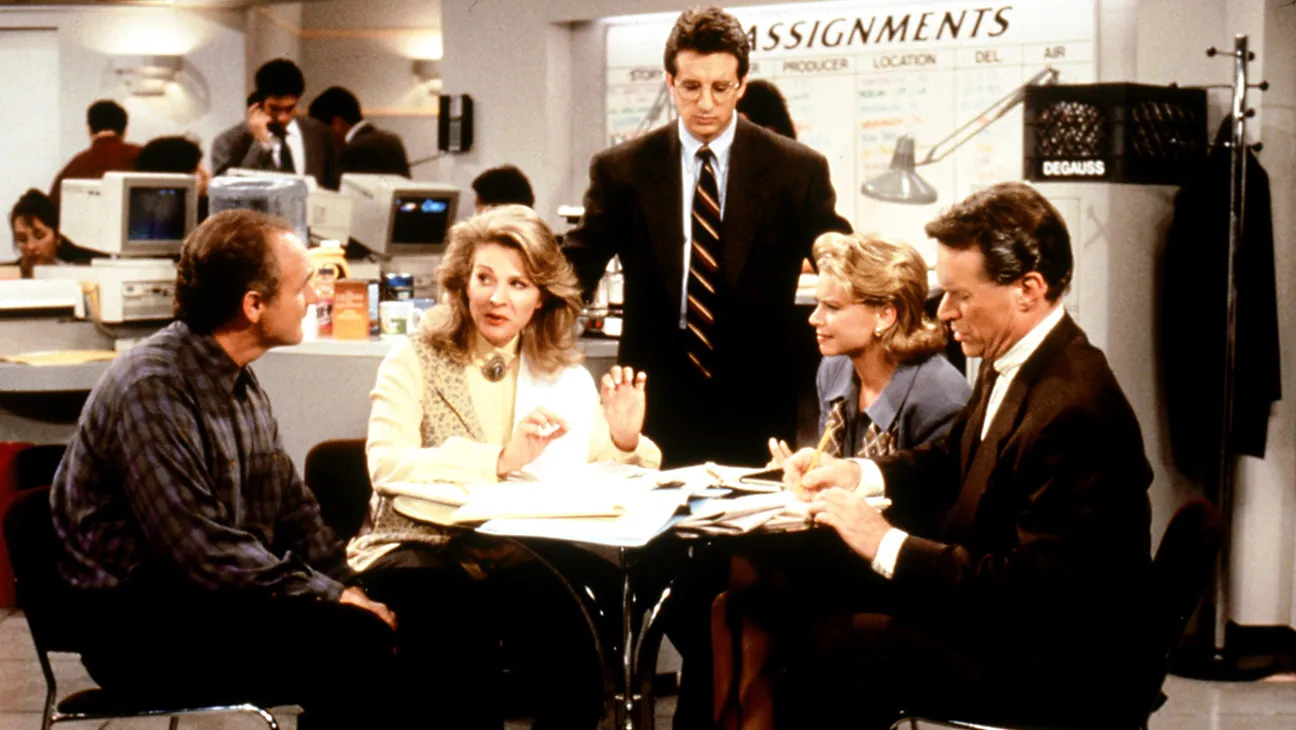
On this day in 1988, CBS aired the pilot episode of Murphy Brown. The series would prove to be a groundbreaking sitcom that would spark conversation and debate over its decade-long run.
The pilot episode, titled “Respect,” aired on November 14 and introduced viewers to Murphy Brown (played by Candice Bergen), a sharp-tongued, recovering-alcoholic investigative journalist returning to the FYI news magazine show after a stint in the Betty Ford Clinic. Viewers quickly connected with the show’s blend of workplace comedy, topical satire, and unapologetic feminism that defined it through its original run from 1988 to 1998, and through a revival in 2018.
Created by Diane English, Murphy Brown was conceived as a vehicle to explore the life of a powerful, unmarried woman over 40 in a male-dominated newsroom. English, fresh off writing for Foley Square, drew inspiration from real-life broadcasters like Lesley Stahl and real-life newsroom chaos. CBS initially hesitated, fearing the character’s abrasiveness would alienate viewers, but network president Kim LeMasters green-lit the pilot after Bergen’s audition showcased Murphy’s wit and vulnerability.
The show’s ensemble quickly became iconic: Charles Kimbrough as the pompous anchor Jim Dial, Faith Ford as the naïve Corky Sherwood, Joe Regalbuto as the anxious Frank Fontana, Grant Shaud as the neurotic producer Miles Silverberg, and Pat Corley as the bar owner Phil. Later seasons added Lily Tomlin as Kay Carter-Shepley, turning the newsroom into a pressure cooker of egos and deadlines.
Murphy Brown peaked during its fourth season (1991–1992), when a storyline about the titular character choosing single motherhood ignited a cultural firestorm. Vice President Dan Quayle criticized Murphy in a May 1992 speech, calling the fictional pregnancy “mockery of the importance of fathers” and blaming it for glorifying unwed motherhood. The show responded in its season premiere with a episode titled “You Say Potatoe, I Say Potato,” mocking Quayle’s infamous spelling gaffe while defending Murphy’s choice. The feud boosted ratings—26 million viewers tuned in—and earned the series its second Emmy for Outstanding Comedy.
Over its original run, Murphy Brown collected 18 Emmys, including five for Bergen (who famously asked the Academy to stop nominating her after her fourth win). The series tackled abortion, breast cancer, the Gulf War, and media ethics, often weaving real headlines into scripts. Its “secretary carousel”—62 assistants in the first three seasons alone—became a running gag, with guest stars like Bette Midler and George Clooney passing through the revolving door.
After cancellation in 1998 amid declining ratings and Bergen’s desire to exit, CBS revived Murphy Brown for an 11th season in 2018. Now anchoring a cable morning show in the age of Twitter and #MeToo, Murphy battled fake news and millennial colleagues. Critics praised Bergen’s return but noted the revival’s struggle to recapture the original’s bite; it lasted 13 episodes.
Quick Links from Cord Cutters News
