
Warning: This post contains spoilers for the first two episodes of Nocturne
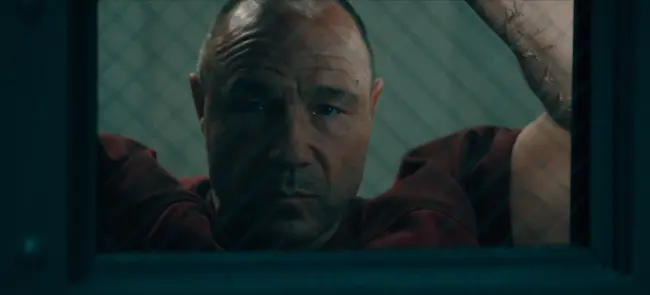
Hannibal Lecter’s shadow looms large over the cop vs. serial killer genre. But rather than run away from comparisons to the not-so-good doctor’s legacy, the cast and creative team behind the Apple TV thriller Nocturne ran toward Thomas Harris‘s signature creation. That approach starts with Stephen Graham, the Emmy-winning Adolescence star who plays the show’s version of Hannibal the Cannibal — a Pittsburgh-based prolific murderer named Jurek Walter, who is currently in lock-up, but still flexes his menacing physical and mental muscles behind bars.

“As an actor, you take things in, be it in art, music, literature, or other films,” Graham tells Gold Derby about channeling Hannibal for Jurek. “We’re like sponges … but you also always try to find a brand new way in.” Asked which screen version of Lecter is his personal favorite — Brian Cox in Manhunter, Anthony Hopkins in his Lecter trilogy, or Mads Mikkelsen in Hannibal — the actor splits the difference between the first two. “Both Brian and Anthony were magnificent,” he says. “I remember seeing Manhunter with my dad when it first came out and just going, ‘Wow.’ So to be compared to those two people means a hell of a lot.”
“It almost felt intentional to me,” echoes Liev Schreiber, who plays ex-detective Jonah Lynn, Nocturne‘s variation on Harris’s Will Graham, the man who caught Lecter. “I didn’t mind those potential tropes, because it felt like a good place to start. You’ve got a homicide cop, an FBI agent, and a serial killer, so we think we know where we are. But then confounding expectations is part of the fun.”
For the record, Nocturne — which debuted its first two episodes tonight on Apple TV with eight more to come — has its own source material, the Joona Linna crime novels penned by married Swedish authors Alexander Ahndoril and Alexandra Coelho Ahndoril. Showrunner John Hlavin specifically based the first season two installments in that series, The Sandman and Lazarus, but he’s also not shy about acknowledging the debt the series owes to Harris. “Obviously that material exists and has been made iconic by Anthony Hopkins,” Hlavin says. “We knew we were going to be compared to it, so our thinking was to shy away from it as much as we can.
“Right off the bat, you can see that our show looks very different from those movies,” the showrunner continues. “Jurek’s cell looks more like a dog kennel; it’s sterile and there’s nothing on the walls. Also, Hopkins is only in about a half-hour of Silence of the Lambs, but we’re in Jurek’s space over the course of 10 episodes, which meant that we couldn’t rely on any gimmicks. You have to get deeply into the character when you realize you’re going to spending that much time there.”
Still, Hannibal and Jurek do share some proclivities — like an ability to use their silver tongues to talk others to death. Lambs fans remember well how Lecter persuaded Miggs to swallow his own tongue after daring to attack FBI trainee Clarice Starling. The series premiere of Nocturne opens with Jurek gently convincing a neighboring prisoner to beat his head against the wall of his cell until he collapses in a bloody heap. Hlavin reveals that sequence was actually filmed towards the end of the series, and then dropped into the first episode as a cold open.

“We had written drafts where a character told that story, but after giving it some thought we decided, ‘It’s interesting to hear that he did that, but how would we show him doing it?’ And by that point in the shoot, Stephen had been in that room for awhile, and had a lot of comfort in that space. It really satisfies that feeling of, ‘This is a guy that gets in your head.’ Jurek is a true narcissist, and a guy who makes others want to hear his voice. Then, when his sunlight is off of you, the bitter cold of not being in his warmth anymore causes people to do the things he wants.”
You might say that Jurek seduces his targets, after a fashion. That’s an adjective that Rory Culkin uses to describe the relationship that his alter ego, a prison guard named Karl, develops with the killer. “I thought of Karl as this beacon of light who is also fascinated by the dark,” the actor says. “When he stares into the abyss [in Jurek’s cell], he’s fascinated by it, even though his co-workers warn him not to be manipulated. It is a seduction for him; it’s a crush — he can’t get Jurek out of his mind.”
Across the first two episodes, we see how Karl falls under Jurek’s spell, both wittingly — and unwittingly — doing his bidding. “He’s methodical,” Graham says of the genius behind the killer’s madness. “And he knows how to use the tones of his voice to give people what they think they want. With Karl, he can sense a vulnerability that makes him a bit of a caterer. I had an outstanding voice coach, Susanne Sulby, who helped me capture the Pittsburgh accent and develop all these tones to his voice.”
Schreiber also got to add some Pennsylvania grit to his voice for Jonah, although not to the extent that Graham does in the flashbacks the two actors share in the first two episodes.

“Stephen’s real voice is strange if you’ve never been to Liverpool,” the actor jokes. “But as Jurek, he’s got this strange American droll that’s kind of mesmerizing. And then he drops it into this childlike register, which was the scariest piece for me. It creates this idea that Jurek is someone who is frozen by trauma in their childhood and acting from this petulant place. That’s the aspect of the character that I thought was really brilliant.”
As we learn in the premiere, Jonah stepped away from detective life after catching Jurek, but is brought back into that world after new developments surface about the whereabouts of one of the killer’s still-missing victims. The second episode climaxes with Lynn’s friend on the force, Saga (Zazie Beetz), going undercover as a prisoner named Esther in the hopes of gaining more intel direct from the source. The enormity of that task kicks in when she enters her cell and sees strange writing all over the wall. Meanwhile, Jonah is scouring the wilderness in his own investigation, and stumbles upon equally odd symbols carved into the trees.
“All I can tell you is that those designs are very specific and a bit of a harbinger of doom,” Hlavin teases. “We wanted the audience to feel, ‘What have you gotten yourselves into?’ With Saga, she’s a very confident person, but this isn’t like an ordinary drug bust; she’s not going to have the protection of her clothing, uniform, or a gun that might be hidden somewhere. She’s at her most vulnerable, left with her brain and what she can physically, and then she sees this symbol and we don’t know what it means — but we know it’s not good.”
“I definitely felt like Saga had this armor, whereas Esther is a lot more tender and open to chaos,” Beetz agrees. “That environment and being confined with other people who are chaotic brings that out, too. And that cell really was kind of spooky, and I let that impact me characterwise. One of my favorite parts of the show was developing the undercover element and building out Saga and Esther; you see me going in there to get some information, and there will be more to come.”

As for Jonah’s Blair Witch-like moment in the woods, Schreiber confesses that he “didn’t entirely understand” what all those carvings were in the moment, but appreciated the puzzlelike nature of assembling those clues in his own mind. “I think the audience will appreciate that, too,” he adds. “What’s happening and what does it all mean? It was also fun for me to be outside in the woods.”
Naturally, Hlavin knows what’s to come in Episode 3 and beyond, but he’s not about to give the game away. “Those symbols in the cell and in the woods are tied together, and pointing at something,” he teases. “It’s also about how you see them if you’re standing in a certain spot, because otherwise you would walk right by it and just think it’s a scratch in the tree.
“That’s the thing with noir in general — it’s a story of secrets,” the showrunner observes. “So with the tree carvings, it’s about how that person would want to communicate in a way that would keep a secret. And that’s what you end up with.”
