
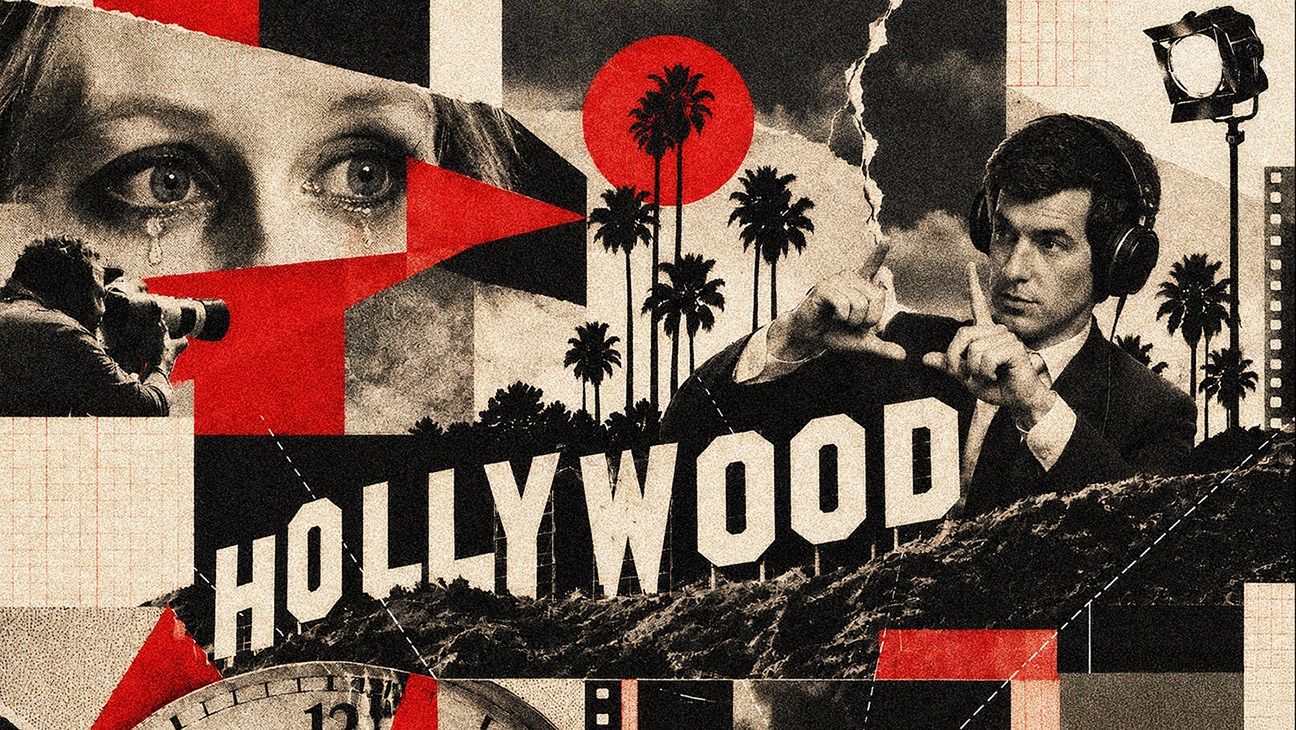
More than 100 years ago, a filmmaker directed the first documentary. Controversy has followed the form ever since.
Nanook of the North, Robert Flaherty’s Inuit vérité, redefined way back in 1922 how we imagined cinema, but critics in subsequent decades charged him with staging scenes, sensationalizing events and substituting actors for real people.
In the 1980s, Errol Morris disrupted the doc world with The Thin Blue Line, his reexamination of a Texas murder case from a decade earlier. So compellingly did Morris interrogate the incident that it led to an overturned conviction — but prompted a whole new inquest into why he reconstructed scenes. Two decades later, Michael Moore dropped the grenade of Fahrenheit 9/11. The look at George W. Bush’s foreign policy sins brought Americans to the theaters by the millions but generated heat for what Moore exaggerated or left out.
Yet something feels different with this decade’s documentary sensation, which doesn’t just play fast and loose with the truth, but plays fast and loose with the truth while making the truth the very subject of its inquiry. Nathan Fielder and Lance Oppenheim’s observational Elizabeth Holmes doc You Can See Everything, ostensibly about how much Holmes and her husband Billy Evans are lying, has already solicited the kind of box office dollars more familiar to midbudget thrillers, becoming the non-fiction film world’s buzziest pop-cultural phenomenon since a posthumous Michael Jackson rehearsal doc in 2009. Like its forebears, YCSE leaves itself open to questions about manipulation, starting with the fact that two camera setups followed every supposedly unselfconscious reaction, and the fact that Holmes initiated the project, possibly with crisis PR specialist Risa Heller, who helped place a soft interview in The New York Times at around the same time. I suspect the coming months will bring more objections of the sort.
But this time the skepticism goes beyond fears of subject-nudging and selective editing. The entire YCSE project is built by people who specialize in presenting falsehoods as truth, each layer composed by someone whose very brand is deception, like a grift-y cinematic lasagna.
Holmes spent years duping presidents into believing the reality she created, and in that light, how many of her utterances can be taken as honest? Did she really, for instance, not understand “Who’s on First?” or what Fielder was getting at by challenging her on what Theranos’ machine couldn’t do in reality? Or just find it convenient if we found ourselves believing that she didn’t? For his part Fielder has made a profitable living fudging fiction into truth — a season finale of his HBO show The Rehearsal tragically convinced a child he was the boy’s own father — and his involvement here can’t but cast a wait-a-minute cloak over the exercise. What we’re seeing, what we’re not seeing, how details have been shaded to make everyone in it, including him, seem like something they may not have been.
Nathan Fielder moniters the cameras in the season one finale of The Rehearsal.
Even the person regarded as the most authentic — Amanda Seyfried, the audience surrogate into whose hands we unthinkingly place our trust — is a skilled performance magician who did not, previous screen appearances to the contrary, introduce writers to William Randolph Hearst, get raised by Jean Valjean or hold a contest to determine her real father on a Greek island. Yet somehow we assume that she and all of her fellow master-conjurers are here telling us what actually happened. I mean, it’s a documentary; why would they do otherwise?
Fielder and Oppenheim made truth the subject of their documentary — “you can see everything,” the title promises us — and then proceeded to fillet it at every turn. It is a testament to their power as filmmakers that we come away smugly confident at how we have caught on to what Holmes is trying to do to Fielder while often staying oblivious to what Fielder has just done to us. As veteran journalist and commentator Matt Pearce wrote on Substack recently, ” ‘I’m just trying to be accurate,’ Fielder says toward the end of his film, lying through his fucking teeth.”
That’s not to say the movie isn’t great fun, full of enjoyable surprises and, in the end, a compelling meditation on reality and gullibility. It also doesn’t mean we’re not the mark.
On one level, perhaps none of this matters. Why get hung up on how much is “real” when the whole thing is such a damn good time at the theater? Yet the movie’s blunt force comes precisely from that documentary categorization; fully invent the exact same film and YCSE loses a lot of its power. The fact that it’s real is why it’s shocking. But even more important than what the documentary does for Fielder is what Fielder does for, or to, the documentary. Such a good time risks turning the category, currently our most important broadcast investigative medium, into one more ennui-inducing vehicle for postmodern winkiness, a perhaps not-great development in an ecosystem where shared facts are already gasping for air.
In such a context, other fast-and-loose criticisms raised against docs this season — Alex Gibney’s decision to create and deploy a speaking avatar of Elon Musk using his own words in Musk, or Ava DuVernay’s deployment of AI to bring archival photos to life in The 14th — seem like peccadilloes. And yet all come as part of the same set of questions. Documentary has entered a double reckoning, both technologically in this deepfake age, given how easily something can be made to look real, and ethically, given how much harder it can be in an era of echo-chamber truth to know what “real” is in the first place.

Elon Musk in Alex Gibney’s documentary Musk.
Alex Brandon/AP Images
Into this morass, a further irony: a movie that’s largely scripted but may paint a truer picture. Ali G has lost something off his fastball since he and the Sacha Baron Cohen who disappeared into him gleefully confronted public leaders on HBO two decades ago with his convicted stupidity, revealing what lies behind the politesse of an ATF officer, a surgeon general and Donald Trump.
And yet at his best, Baron Cohen in his new movie still pulls off all the spiritual aims of the season’s big documentary, only without hiding behind that word’s protective shield. Ali G: Who Iz I arrives in the same place as YSCE just from the other direction, seeking to tell us the truth of a full spectrum of social activists and cancel warriors not from a spot of pseudo-verite camera-capture but of carefully-written and -performed screen artifice, picking up on the lab experiment Baron Cohen started in 2018’s Showtime series Who Is America? Perhaps it should come as no surprise that working with and learning from him on that show nearly a decade ago was one Nathan Fielder, who came to understand both the combustive power of unmasking foolishness onscreen and how much more explosive the chemical reaction would be if you just pretended everything was real.
Every era gets the brand of documentary it deserves. In a time of rampant disinformation and unabated conspiracy theories, when nobody believes anything they (or their algorithm) haven’t curated and everyone resists attempts by others to try to change their mind, when every person speaks their own “truth” and decades of relativism has turned objective facts into a hilarious fiction, YCSE is, for better or worse, our most emblematic work.
The film opens a new window, all right, not on Holmes but on us, staggering among the postmodern wreckage like a marooned sailor who still hasn’t come to terms with the fact that his ship is gone. You Can See Everything is a fascinating snapshot of our social state. I’m just not sure it’s a documentary.
Sacha Baron Cohen in Ali G: Who Iz I?
Courtesy of Amazon MGM Studios
This story appeared in the Nov. 12 issue of The Hollywood Reporter magazine. Click here to subscribe.
