

Picture Credit: Netflix
After more than two decades as one of Hindi cinema’s most respected screenwriters, Ritesh Shah has stepped behind the camera with Gajab Raat, a fast-paced Indian Netflix crime thriller starring Manoj Bajpayee, Divya Dutta, Akshay Oberoi, Saqib Saleem, Rajiv Gupta and Nushrratt Bharuccha.
Known for writing critically acclaimed and commercially successful films such as Kahaani, Pink, Airlift, Raid and Sardar Udham, Shah has built a career navigating the complexities of human behaviour, institutional corruption, and moral compromises. His directorial debut gathers these interests together in a story that unfolds over a single night in Delhi.
At its center is a corrupt and morally bankrupt police officer (played by Bajpayee) whose encounter with an unfolding conspiracy forces him to confront the boundaries of his own morality. The film, which premiered on October 23 on Netflix following a months-long delay due to its title controversy, has received a mixed response from critics who seem to be divided over the choice the lead protagonist makes in the climax. Nevertheless, the Netflix thriller marks a significant new chapter for Shah with a renewed sense of creative freedom, curiosity and purpose.
In this exclusive interview with What’s on Netflix, Ritesh Shah discusses the circumstances that led him to make the transition from screenwriting to direction, how filmmakers such as Neeraj Pandey, Shoojit Sircar, Sujoy Ghosh and Shivam Nair shaped his approach to directing, and also explains why he chose to conclude the film through negotiation rather than a public exposure of the conspiracy — the point that has drawn the most attention from audiences and critics.
He also reflects on the particular challenges of sustaining suspense in a single-night thriller designed for streaming, the decision to change the original title, Ghooskhor Pandat, following the backlash, and the lessons he has learnt from directing. The interview has been edited for clarity. Excerpts:
You have spent years establishing yourself as a seasoned screenwriter. What made Gajab Raat the right story to finally step behind the camera as a director?
For a long time, I was not trying to pursue directing, and no one was asking either. I think after the release of Batla House, people started asking. Tushar, who is a fellow writer and director, asked me. Then there was obviously Raj Kumar Gupta because of the Raid franchise. So people were asking.
I don’t know what kind of a line of thought it was, but I used to keep on telling everyone that I’m not actually looking for a promotion within the hierarchy. I am surrounded by such good directors like Shoojit (Sircar) Da, Neeraj ji (Pandey), Sujoy (Ghosh), Shivam Nair. I know them personally, and I know if there’s a good story, any of them will be willing to work on it with me.
I had done a series before this with Neeraj ji. We had tried to work earlier also, but somehow it didn’t happen in the good times; it happened in the bad times. It was COVID for us and the whole world. Then obviously, it’s not just work with him. We talk about a lot of things, about books, about music, about history, and things like that. And then within three or four months of working on that, he asked me that I should consider direction. And I threw the same line at him, saying, “Sir, I’m not looking at it as a promotion.” And he was like, “That’s where you’re wrong. You know, it is a promotion. It’s a big deal to make a film.” But again, we didn’t pursue it, or say I didn’t pursue it.
The story was developed from an idea that he had given me about this girl being dumped outside a theater when the 12 o’clock show crowd runs out. And he wanted a sort of interdepartmental talkie drama, something like the kind of plays that I used to do for Act One. So I wrote the film thinking that somebody else would direct. And initially, we did meet a few directors, but I just thought that they had not spent enough time in Delhi to do this sort of a Delhi-centric night film. And then Neeraj said that if you’re not happy with anyone, then let me take up the mantle. And I was very happy.
I said, okay, fantastic. But then he had a rethink, saying that, you know, if I do it, then there is a certain expectation in a certain zone. That people will expect a certain kind of Neeraj Pandey thriller with twists and turns. And it may not, you know, satisfy the audience because it has a slightly different voice of a topical. So maybe it’s better that you finally put your hand up. That way the film will get made. The expectations will be in line because people are a bit familiar with your work also as a writer.
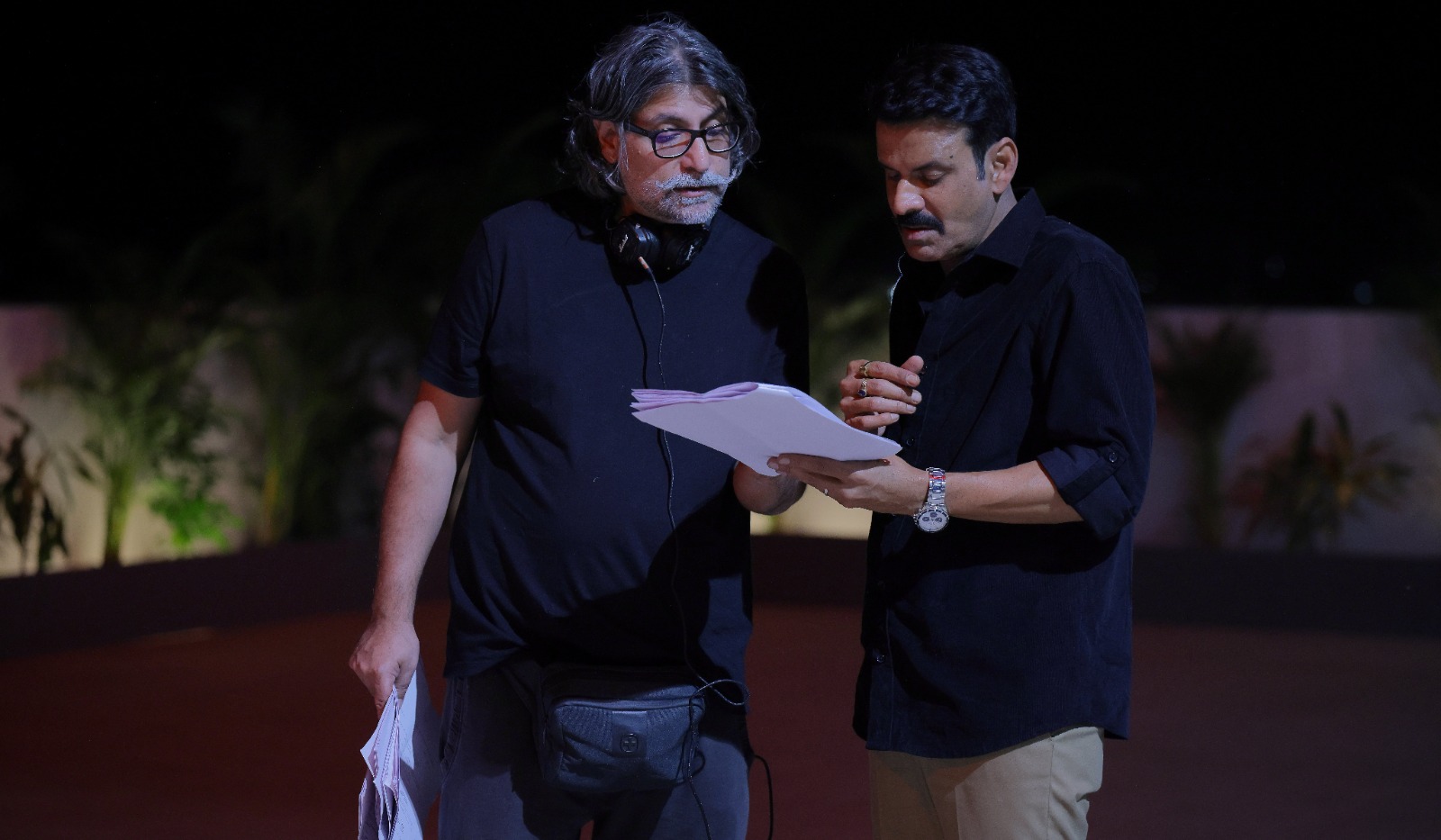
And I was kind of strengthened by two things. One, that he’s not a Mr. Moneybags producer. So it’s not that I would have a problem with themes or ideas or what I want to express. Second thing was that he’s technically sound. So I have somebody on set to help if I would — because I would be directing for the first time — have trouble with modern equipment, which has not been used on the sets that I have been on. For example, a gimbal. I briefly saw that when we did I Want to Talk with Sridhar. But Ronin and all these things were a bit new to me.
So I thought I had the buffer of somebody I get along well with, who can also guide me. And textually, I agreed with him that it had an element of the kind of stuff I used to do as a writer or as a playwright. And then the biggest thing was that the film would get made. So that made me say yes. It was not a career plan or a journey of sorts. More to do with the text and the safety net of a producer like him.
Picture Credit: Netflix
What was the biggest adjustment you had to make when you became responsible for translating that screenplay into a complete cinematic experience?
During the writing stage, there was not much tailoring. And that advantage was also figured out: suppose I land on a location — the film was shot on a live location — which I don’t really like; I can completely change the scene on location. I can put it in a direction that suits the physical topography of what I have found instead of what I had in mind. Earlier, as a writer, it was sort of some backseat driving: you could go to the edit, go to the sets, or sit through sound sessions and just pass judgment. In this case, you had to know the subject deeply enough so that, in case you were judged and asked questions, you would be prepared for that. So there was no gross adjustment in that regard because I’ve been on a film set since I was 21 or 22.
What instead changed was the whole discipline required to run a film set. You could be on set for 16 to 18 hours, because you get up before everyone else, prepare your scenes, reach the location before the crew, and discuss the next day before leaving. That discipline I hadn’t experienced because with writing, it’s just you in a room, and you can do whatever, whenever you want to.
Did directing Gajab Raat change the way you look at your own screenplays now? Did you discover anything about writing that you had not fully understood until you experienced it from behind the camera?
I think there were two nights in particular when I quietly apologized in my heart to all the directors that I’ve worked with about how difficult it is to be in their position with weather, costume, art, and so many other factors.
So now when I write for others, there will be a bit more care in where I think I can help them at the paper stage itself. Not that I didn’t respect the profession earlier, but I now have a much deeper respect for the direction aspect of it. For me also, after a long time writing, the enjoyment part had drastically dropped. It had turned a lot more into work. So being a director, that kind of broke the shackles in the sense that I’m re-enthused about cinema.
I kind of had stopped enjoying being a part of this world. I didn’t have that wonder and awe, which has been there ever since I’ve been seeing films. So I really enjoyed the process of the practical aspect of it. It was challenging and refreshing.
Was there a moment during the making of the film when you realized that directing offered you greater creative freedom than as a writer?
See, that is a luxury I would not immediately feel because if you look at my collaborators, they may not have done all my ideas, but they always gave me the freedom to express myself completely. So I didn’t feel that jump that now I am a director, because even as a director, I myself worked like the way they work: every suggestion that made sense for the narrative was welcome. I had never looked at direction to get some sort of power, because even just as a writer, I didn’t want a writer’s dictatorship.
If I were the spoiled younger son as a writer, directing meant fitting into the father’s shoes and being a bit more responsible. I look at it that way. I have had that freedom. They all gave me that freedom. So I can’t certainly say that I just found it with this film.
You have worked with some of the most brilliant directors as a screenplay writer. Which lessons from those collaborations influenced your approach to directing your first film?
I have done about 45-50 films across 25-26 years with so many brilliant directors. Some, unfortunately, are no longer in this world. They taught me not just cinema lessons but also aesthetic lessons, life lessons, and lessons about food and taste. But I can quickly point out two or three things that I applied in this film.
One is obviously from Neeraj Pandey himself. I knew I had a talk-heavy film, which was more like an intimate play. How to use the motion picture aspect of it and how not to make it boring; I applied it immediately from him because it suited the content. The second lesson came from Shoojit Sircar. He taught me to make acting seem less like acting and more like genuine reacting to a situation, even when actors are fumbling over their lines. I’m okay with fumbles because real people don’t have scriptwriters around to deliver perfect dialogue.
I also drew from some of the mainstream directors I’ve worked with when it came to making the film more communicative. Although it’s a night film, I didn’t want to go for a very high contrast with shadows. I wanted the visual palette to give the impression of night without making it arty or uncommunicative. Since it was going to be on Netflix, I was conscious that people might watch it on their phones and tablets. The imagery had to remain accessible across those viewing formats.
There are so many other things that are in my subconscious, like the challenges of shooting and things like that, which I think I must have picked up from being on set with some of these great directors.

Picture Credit: Netflix
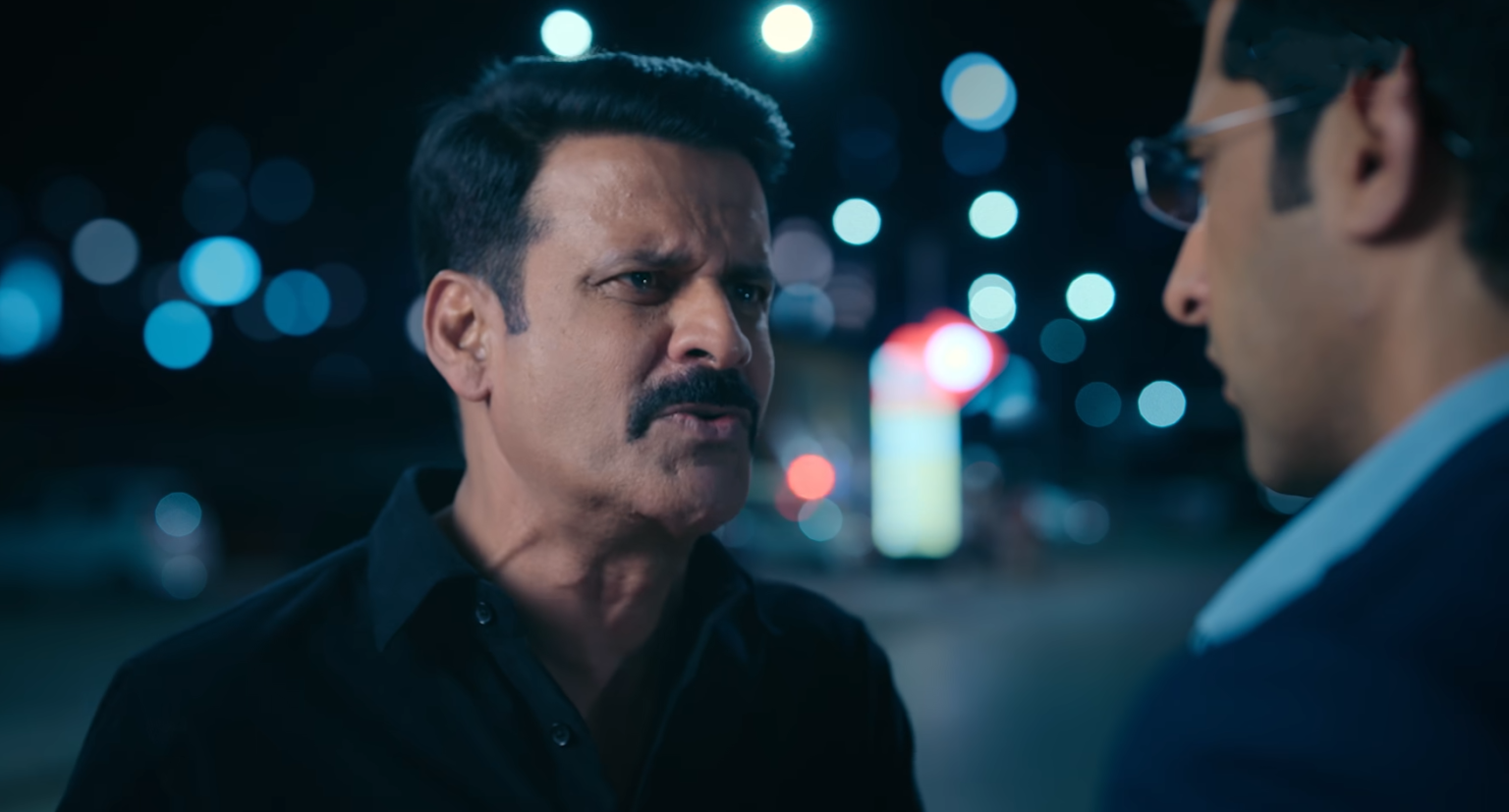
Manoj Bajpayee’s character, Ajay Nirvit, is described as a highly efficient and highly corrupt police officer. What drew you to a morally grey cop like him, and how did you and Bajpayee shape his character and internal conflict?
Fictional creation also doesn’t come out of thin air. Manoj Bajpayee, I, and even Neeraj have all spent years in Delhi. In life and literature, you encounter people who might be what we call corrupt in many ways, but they have a personal red line or a line that they will not cross. These are people we have seen, met, observed, and read about. So there was no difficulty in communicating that. In fact, when Manoj heard the first draft, it was very raw. There was no character explanation. When I was going through the scenes, he could, from behavior itself, judge what kind of a person he is.
For example, if you read the book Sacred Games, not the show, you will find that Sartaj Singh is aware of the corruption in his police station. He knows why his colleagues are collecting certain money: what it is spent on, including for things such as the cremation of unidentified bodies. But when it comes to exploiting a particular woman complainant, that is where Sartaj draws the line.
Similarly, Ajay Nirvit also draws a certain line at a certain point, thinking that this person deserves to live or survive. It may not be a life-changing experience for him. If you see the film, he clearly explains what he’s doing or why he’s doing it. And how is he going to be from here on? So it’s just that he has a certain line when he brings in his morality.
A wider audience in general might have the heart and the stomach for a character who is brilliantly white. Or even if he makes a switch from black to white or grey to white, he does it in a fantastic fashion. That is somehow not the understanding of my cynical life. I just feel there are margins of improvement. That’s just about it with many of us. So I work within that margin because I believe that to be true. I cannot hard-sell something that I don’t believe is entirely true.
Having said that, there are also examples of many brilliant, honest officers. The problem is that not all of them were highly efficient. There is such a dichotomy in life and in departments. It’s very difficult. There are also examples of near-perfect officers, which might make for interesting stories. For another day, I guess.
We meet Ajay Nirvit while he is conducting a raid at a hotel. And that sequence immediately establishes his opportunistic, morally compromised nature. Why did you choose to introduce him through that particular situation rather than a more conventional police procedural scene?
Because it is in that legal grey zone. If you read about laws condemning adults in hotel rooms like this. And then if you read it along with, say, SITA or immoral trafficking in general. It is in such a grey zone that a lot of people obviously have had complaints about being exploited by cops in such a situation. To quote the popular meme going around, one scene has Manoj Bajpayee walking around and saying, “Everyone thinks I’m a bad man, but I’m actually despicable.” That’s a kind of walk of shame that he does through a passage.
And in that very scene, Rahul, a lawyer, stands before him. The lawyer knows the law, so Ajay doesn’t act against him. You’re introduced to the character through a grey zone. Is the law itself wrong? No. Is what Ajay is doing within that situation right? No.
Both the plot and the character understand the moral shades they’re operating in. That ambiguity is particularly important to Ajay’s character.
The film unfolds over a single night. What were the biggest challenges in sustaining tension across such a compressed timeline without making the narrative feel artificially constructed?
That’s the game of pacing and technicality. That’s a losing battle. You’ll never win that battle. People who understand what one is saying don’t have a problem. Problem is with people who look at films with a certain prism.
Like, I am trained in filmmaking. I’ve read hundreds of books on filmmaking. I’ve seen thousands of films. There are theories about a film’s pacing, how the night films should be, etc. I have zero belief in that.
I don’t believe a lot in plot either, even though I’m a writer. What matters most to me is why you’ve made the film in the first place. The challenges are about that. What do you want to say? Is this how you’re saying it? Is it the right way to say it? Of course, some people will be dissatisfied with the pacing, the way it’s cut, or the way it flows, or where you stop, and where you speed it up. Even at the risk of sounding arrogant, which I’m not, by nature, I don’t care for that form that much. I do care about what it is that I want to express as an idea. I don’t have to give a lecture. I have to communicate it in an entertaining form as much as I can. And for that, I’ll make choices. I’ll make ten choices. Six might be wrong. Four might be right. Or the reverse can happen. But that is for others to judge. I’m just making those choices so that I can communicate my ideas in a meaningful and entertaining way.
Challenges are always the same: Is it too long? Is it too short? Is it going too fast? But I’ve stopped worrying about that because there’s no escape. It’s a maze, and you’ll never be able to judge. You can only go by your feelings. You feel that the film should move at a particular rhythm, and you follow that instinct.
Picture Credit: Netflix
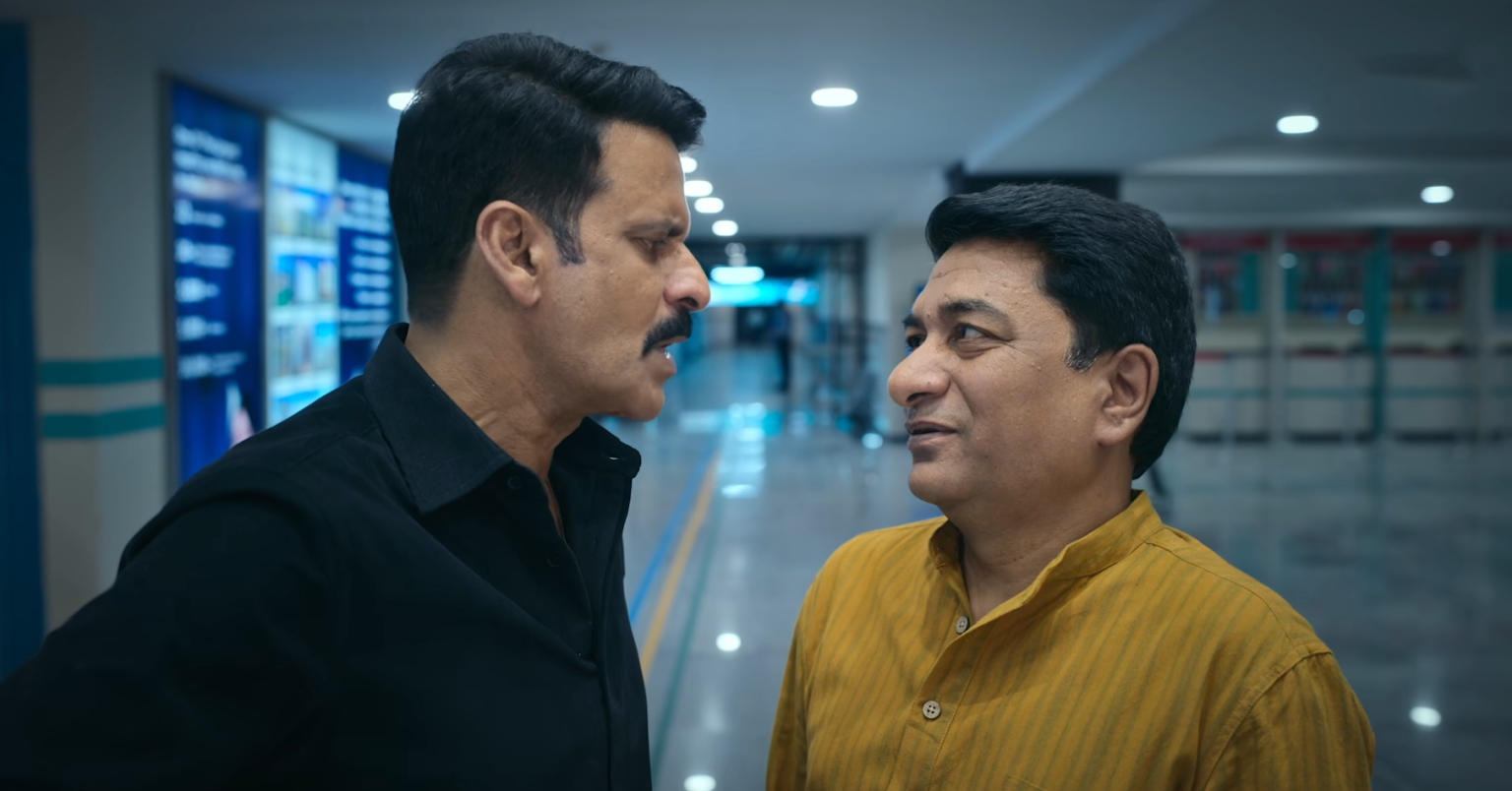
Arya’s investigation concerns a conspiracy to manufacture a vaccine shortage, create public panic, and profit from that crisis. Why did you choose a public health emergency as the centerpiece of the conspiracy rather than a more conventional political and financial scam?
I just felt that because it was written or conceived during the times of a health crisis, something that affects a lot of lives directly where human life is involved, it seemed like a more appropriate choice in this case compared to, say, financial scams, which do affect people but more indirectly.
But again, these whole labels of “black comedy” and “one-night thriller” — these are just labels or marketing tools that we use to convey what we want to talk about. And in this case, it’s about personal morality and choices. We want to talk about ordinary men in extraordinary situations making a choice based on how their life has been going. And that is the idea I wanted to explore.
Ajay ultimately uses the evidence as leverage to secure Sunita’s resignation and Arya’s transfer to Singapore for treatment. Why did you choose the negotiated outcome instead of having him release the evidence publicly and expose the entire conspiracy?
That’s a question I get asked, and I understand where it is coming from. You’re looking for a satisfying and surprising ending. In my case, what I’m battling is my own cynicism and practicality or experience of life, where I feel that these fantastic things may not always be the outcome. The best-case scenario is a deal, because Ajay doesn’t have to just protect himself; he has to protect his boss and his department. He’s not out to burn the house down. He’s looking for a deal, just like so many deals in his life. And it seems to be a good deal he’s offering.
Talking about Singapore, it’s not specifically Singapore. The fact is that he’s asking to be allowed to take Arya away. Where he’ll go, we are not sure. The aim is to get Arya out of the hospital in an ambulance without being followed or chased, with a deal in mind. And that safety can only be ensured if other parties have also been given something in return.
Did you take that route also because it’s closer to reality? Or do you believe the system is too broken to correct itself through these conventional channels or exposure?
I communicated these ideas early on with Neeraj as well, and I felt that this approach was more truthful and believable.
From a character point of view, and if I were to imagine a real-life scenario, a deal looks more truthful than outright victory. That’s the belief I have. It’s a cynical belief, unfortunately.
But if I were convinced that he’ll burn the house down, I would have won that vote. But the level of rage had to be felt differently in that kind of a scenario. Maybe it’s a choice in another situation. In this, I felt that a deal is what Nirvit would prefer.
The film’s original title ‘Ghooskhor Pandat’ triggered objections and legal proceedings. Can you walk us through your reaction and the decision-making process? Also, do you think the new title captures the film’s central idea as effectively as the original was intended to?
We had chosen that title because it referred to a morally compromised individual. At that time, I was looking at it as a character study because Nirvit gave birth to this story. We were not aware that it would go out in isolation, and then it would be pluralized in the minds of people.
We were just thinking about the characters; the community was not even within our thoughts. But audiences probably didn’t read the blurb or see the teaser, and the title got registered in isolation and then pluralized in the mind that it’s not about this guy; it’s about a community. That is when we realized that we were thinking about it differently, but it was being perceived differently.
That perception could ultimately interfere with how the film itself was received. So, we had to reconsider our approach. Since we can’t go with the character, can we go with the story, the plot? The film unfolds over a crazy night, during which a character is forced to make a defining decision. So let’s go with that, because that doesn’t bring in the baggage or the prejudice.
From the aesthetics standpoint, a titular title can work better for a completely character-driven plot. But in this case, since it was interfering with the communication of the idea itself, there was no point in hanging on to that.
The second aspect is something I keep harping on: as filmmakers and artists, our work itself stems from the love of people. If your primary communication is hurt, it’s not worth it. Like even in the worst controversial films, I have always tried to be as kind as possible. So, although it was surprising, there was an immediate rethink, not because of the scare factor, but because we were all willing, purely because our intentions were never like that.
Picture Credit: Netflix
You have worked for both theatres and OTT. Does making a thriller for streaming platforms require a different approach to pacing and suspense than making one primarily for theatrical audiences?
I would believe so. I feel that there is an element of distraction with OTT viewing. Whether you’re watching something at home, on your phone while travelling, or in between other activities, the consumption pattern is different. Watching a film in a theatre involves a certain degree of willing participation. We have entered; we have chosen to confine ourselves in a space and not be distracted. A theatrical environment commands a greater degree of attention than digital viewing typically does.
There is a lot of postponement viewing also. You might tell yourself that you’ll watch half an hour tonight and finish the rest tomorrow. One of the encouraging responses to Gajab Raat was that a lot of people told me they had started watching it at night, intending to watch only half an hour before going to bed, but ended up watching the entire film. I consider that a strength of the narrative approach we chose. The idea was to hold the audience’s attention as focused as possible.
That’s why you become more conscious of the functional aspects of storytelling when making something for a streaming platform. You have to find ways to maintain the audience’s engagement. In theatres, perhaps you have a bit more leverage to explore a bit more.
Having said that, both mediums are increasingly challenging when it comes to getting people to notice your work and sustain their attention. But I feel that with digital viewing, you’re constantly on your toes, trying to maintain your grip on the audience.
The film has received mixed reviews. The critics are praising the strong performance and texture of the film but seem divided on the moral arc and ending. How do you see the criticism so far?
I have not seen all of them. I have seen a few detailed ones, which kind of really got the film. I mean, there have been some very good reviews, and it’s not because they are just good that they are giving four stars or whatever that catches my attention. What caught my attention in those detailed reviews is that there is a lot of talk about the choices that have been made in the film. And because they really got a lot of it, there has been a lot of praise.
So that’s one section. Then the second section of audiences has really enjoyed the character and wit. And because of that, they forgave what they don’t feel is a surprising or interesting ending. So they land somewhere in the middle. Nobody has been terrible and scathing, but the third lot has approached the film almost entirely from the perspective of its lack of shock value. But that was never the intention.
Anybody can get into your DMs or messages and say anything that they want to or post it on your wall. With this film, they have been more forgiving, saying that we understand certain choices, but it didn’t interfere with our overall pleasure. Even if it was like that, I have had films that have had five-star reviews.
However, I can broadly tell you with sufficient conviction that the people, the larger audience it was meant for, have connected with the ideas and approach in the film. That’s the feeling I have so far, although it might change. It’s only been three days since the release, and the response could change over time.
That’s an encouraging start for a first-time director.
Yeah, it would have been heartbreaking if it was trashed. As a human being and especially as an artist, if not for appreciation, you crave communication or understanding. So it is an encouraging start for sure. But as I said, in my career phase, there were such films that people raved about. So I didn’t sit with a crown on my head. There is always room for improvement, both in life and in art. So that improvement will go on.
Now that Gajab Raat is out and you have made the leap to direction, do you see yourself continuing to direct, or will writing remain your primary love?
Because the film has just been released, I won’t talk about other things in detail. But I’ve reached a particular stage in my life. It happened because the pandemic gave me considerable time to reflect and spend time with myself. So I wore a few more hats during this process, related to our field.
Years back, I had said that I am ready to be a spot boy on a good film. That might sound like an exaggeration now, but the underlying sentiment remains true. I am clear about my choice: I now want to do only the work I genuinely feel like doing.
Not that I am rich now, but simply putting a cheque in front of the laptop is just not working for me. That is why the prequels and sequels have never happened in my life. I don’t know whether I will produce, I will direct, I will showrun, or I will continue to write — whatever I like, I will do it in any of these 3-4 positions.
