
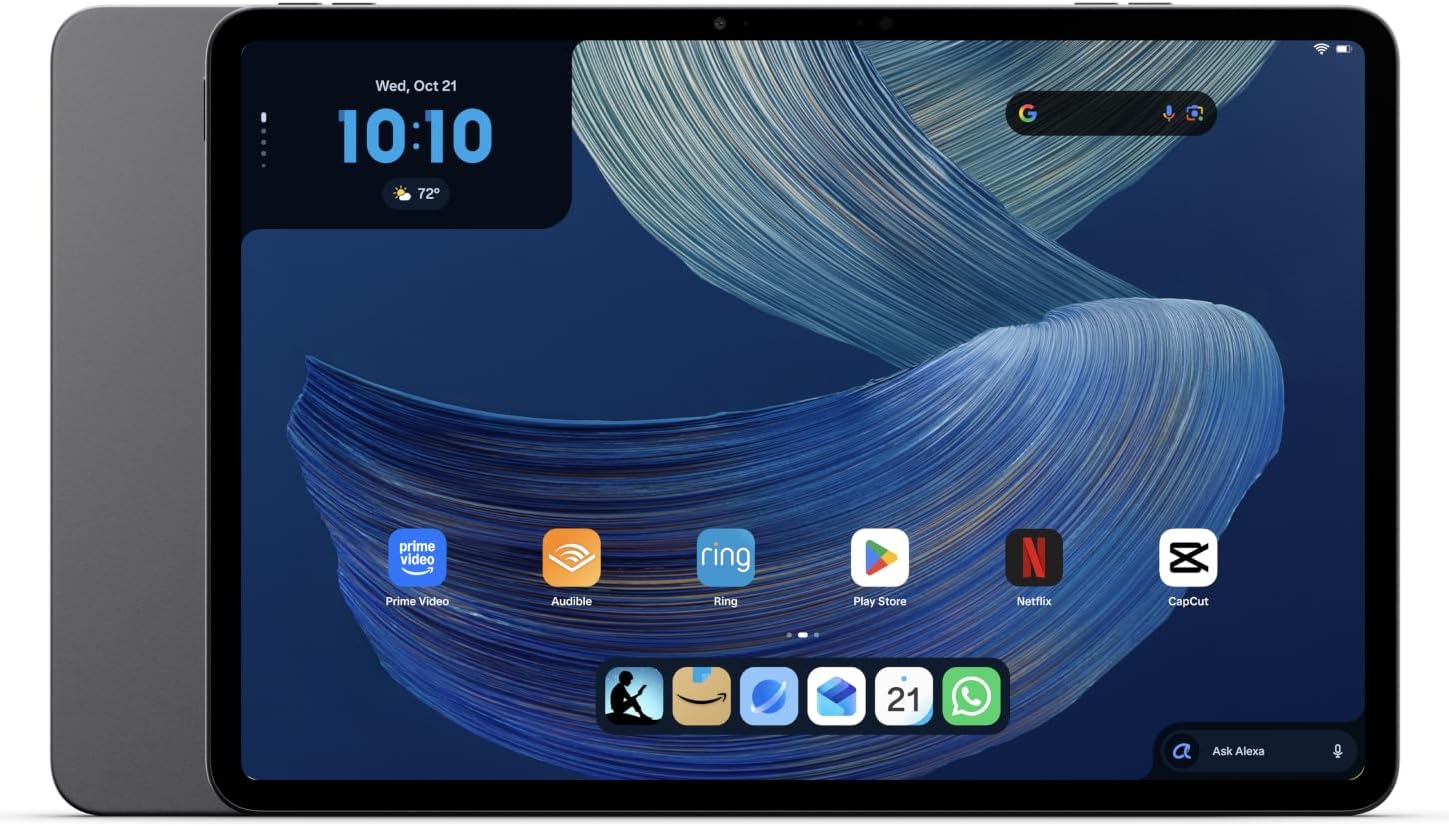
Amazon on Thursday introduced its first tablets built on Google’s Android operating system, shifting away from the company’s long-standing Fire OS software and pairing the devices with its Alexa+ generative-AI assistant. The new Alexa Tablet line, developed under the internal code name Kittyhawk, carries starting prices between $230 and $500, with the highest configuration reaching $550 for a model equipped with 128 gigabytes of storage. All versions use aluminum enclosures, a change from the plastic casings of prior Fire tablets. This gives Amazon customers options for cheap tablets with the full Google Play store instead of Amazon’s own custom store on the Fire Tablets.
You can find Amazon’s new Android tablets on Amazon HERE.
The pricing represents a clear departure from Amazon’s recent practice of selling tablets near the top of its Fire HD range for roughly $180, often with further discounts. The $550 model sits above the entry price of a comparable Apple iPad and matches the cost of a similarly specified Samsung Galaxy tablet. Access to Alexa+ on the devices requires either an Amazon Prime membership or a separate Alexa+ subscription. The assistant, which Amazon has rebuilt around generative artificial intelligence after years of investment, is intended to handle questions, device controls, shopping tasks, and connections to outside services such as ride-hailing and food delivery.
The move forms part of a broader effort by devices chief Panos Panay to reposition Amazon’s hardware toward higher-margin products. For years the company emphasized inexpensive gadgets sold at or near cost in order to encourage use of Prime Video, Kindle reading, music services, and the main retail site. That approach produced trade-offs in screen quality and battery life relative to devices from Apple and Samsung. By adopting full Android, the new tablets also open the Google Play store, removing the need for developers to maintain a separate version of their applications for Amazon’s limited Fire OS marketplace. Fire OS itself is a modified fork of Android that has drawn complaints from both users and software makers.
The launch arrives while global tablet shipments are contracting. Industry data show worldwide unit sales fell 12 percent in the second quarter from a year earlier, to 33.6 million devices. The U.S. market declined more sharply, by 32 percent, amid shortages of memory chips. Amazon’s own share of global tablet shipments dropped to 1.9 percent in the same period from 8 percent a year earlier, leaving it well behind Apple at 34 percent and Samsung at 17.5 percent.
Advertisements continue to appear on the lock screens of lower-priced models. Customers can pay a one-time fee of $20 to remove them, an increase from the $15 charge previously applied to Fire OS tablets; the most expensive Alexa Tablet does not display the ads. Amazon has indicated that earlier Fire tablets will remain functional, though the company has previously ended software support for older Kindle readers on grounds of maintenance cost and has not detailed long-term plans for the Fire OS app store.
The tablets therefore test whether shoppers will accept higher prices in exchange for aluminum construction, unrestricted app access, and deeper integration of an AI voice assistant at a moment when overall demand for the category is weakening.
You can find Amazon’s new Android tablets on Amazon HERE.
Please add Cord Cutters News as a source for your Google News feed HERE. Please follow us on Facebook and X for more news, tips, and reviews. Need cord cutting tech support? Join our Cord Cutting Tech Support Facebook Group for help.
